
Tycoons’
Room
Chinese Immigrants
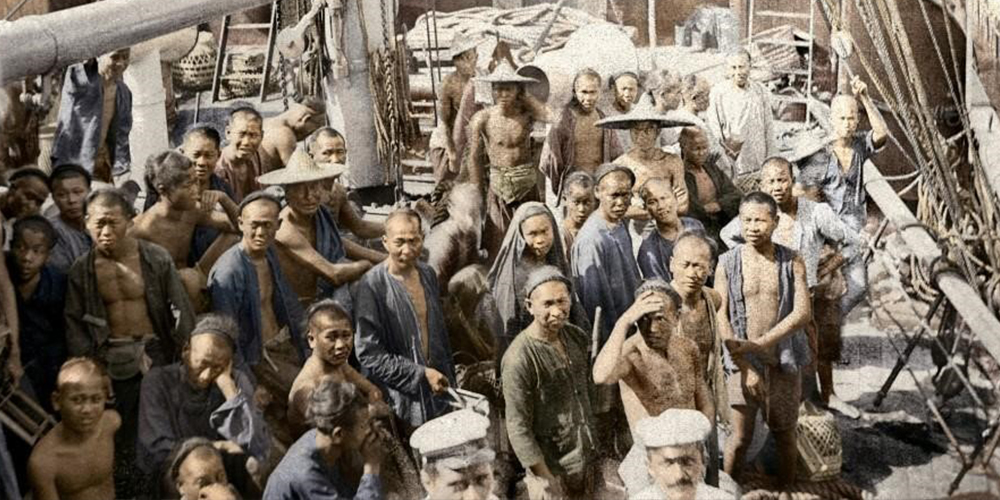
From the early 19th century to the 1930s, thousands of Chinese immigrants flocked to British Malaya in search of a better life. Most of them came from the Fujian and Guangdong provinces in the south east coast of China. Hoping to escape poverty, the Chinese, along with Indian immigrants, filled labour shortages in tin mines, rubber plantations, and railway constructions.
Many left China by selling themselves to labour. These people were deeply in debt to the bosses who paid for their fares and remained so when they sought escape from their hardships by smoking opium and gambling. However, those who manged to escape the vicious cycle would go on to set up their own businesses or become traders, contributing to the rapid economic growth in developing towns.
The arrival of the Chinese brought with them several different subgroups along with their respective dialects and cultures, such as those of the Hakka, Cantonese, and Hokkien.
Tycoons’ Room – Introduction
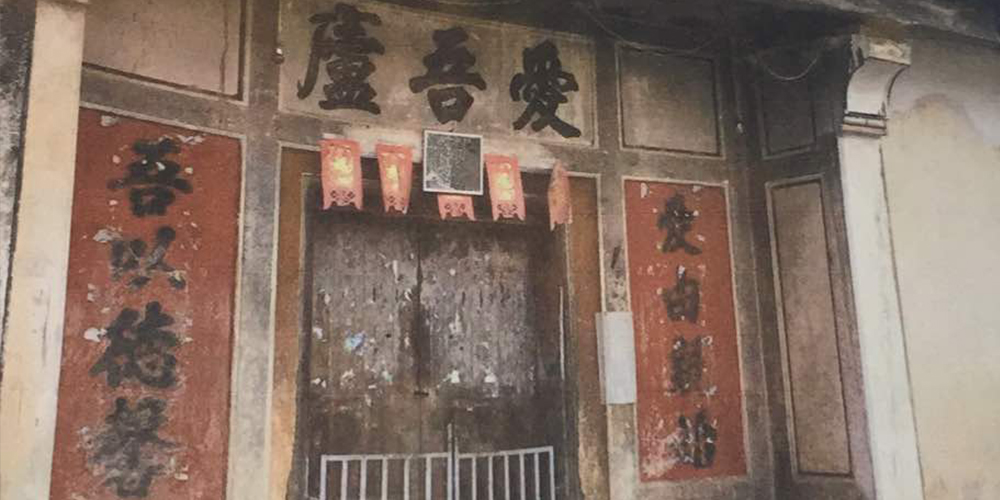
The early settlers left behind families and ancestral homes in China. Many of their ancestral homes bear plaques like these with their family mottos engraved on them. Here are replicas of the plaques from the Lee family home in Mei Xian, Guangdong.
The horizontal scroll at the top reads 愛吾盧 which means ‘love my home’. The vertical couplet on both sides of the door reads 愛由親始,吾以德馨, which means ‘love begins with the family’, and ‘by my virtue I’m esteemed’.
In this room, you will discover the story of a prodigal son.
Lee Chu Shen
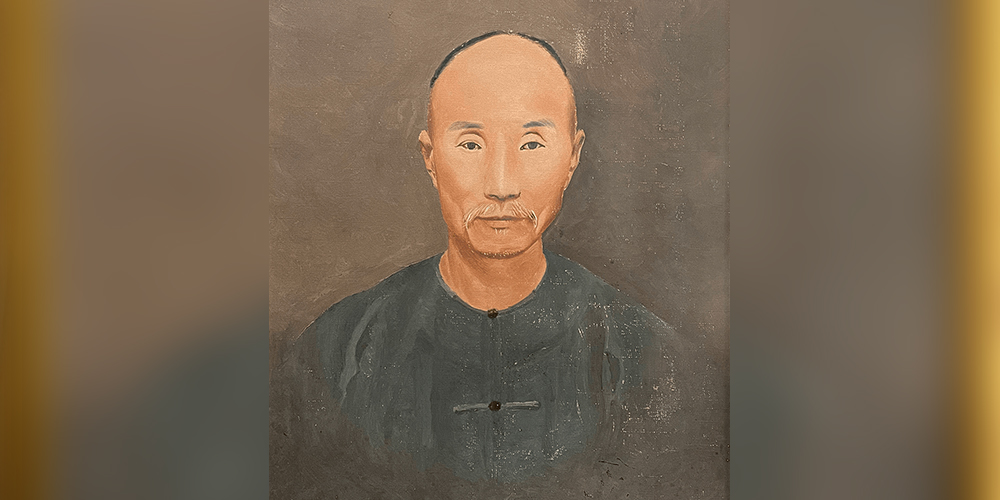
In Mei Xian, Guangdong, was a son of a schoolteacher named Lee Chu Shen. When he was young, he skipped school and was caught by his father. His father tied him up a tree and beat him. Feeling ashamed and heartbroken, Lee Chu Shen ran away from home and sold himself to bonded labour.
Eventually, he landed in Penang where he worked for a Chinese Capitan. He was a very good fighter and eventually gained favour of the Chinese Capitan who gave him a piece of tin-mining land in Lahat, Perak. He made a fortune in tin mining, but he had a problem. He had no wife and no children to inherit his wealth. He remembered the family he left behind in China and decided to return home.
Lee Shu Shen
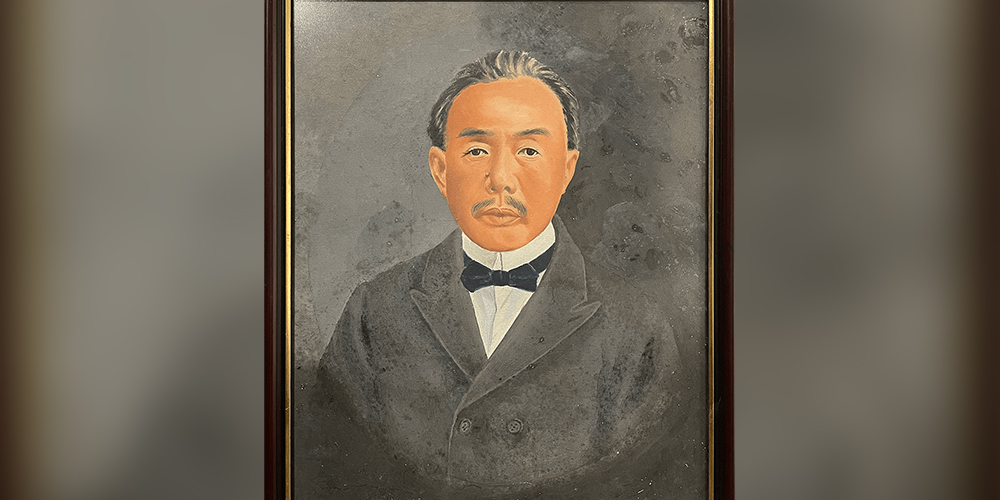
Years had passed, and there was no news of Lee Chu Shen. His family thought that he was probably dead. One day, a stranger came knocking on the door of the Lee family home. Lo and behold! It was Lee Chu Shen.
He told them of his adventurous journeys to the Far East and how he was now a wealthy towkay. He asked permission from his younger brother, Lee Shu Shen to adopt his nephew. The Hakka Chinese have a common practice of adoption within the family called gorfong. Lee Shu Shen agreed.
Lee Ming Hin
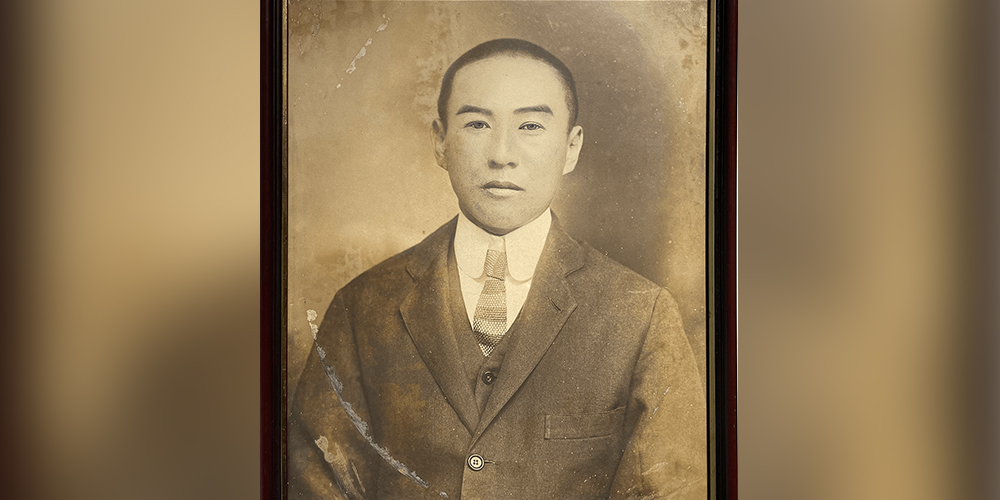
13-year-old Lee Ming Hin was terrified but he was enchanted by his uncle’s stories of adventures in the far East. So, he set sail with his uncle.
He was an enterprising lad. By the age of 20, he took over his uncle’s entire business and founded the Wan Yuen Mining Kongsi. In each tin mine, he had more than 1000 coolies working for him.
As Lee Ming Hin built his wealth, he built himself a simple mansion in Menglembu. Before that, he lived in a shophouse at the main road of Menglembu. Later in life, he moved back to the shophouse to make space for his many children and grandchildren. Guess how many people there were in his family? He had 5 wives, 13 sons, and 9 daughters!
Leong Tian
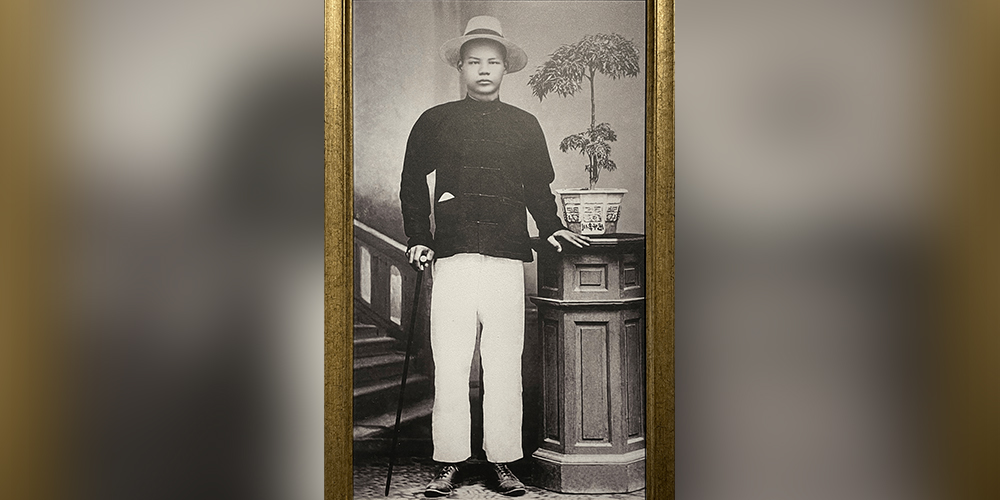
Leong Tian’s story is a rags to riches story. He came from the same province as the Lee Brothers but he came to Ipoh in 1902 under different circumstances. The Leong family was a small clan in Mei Xian. In a dispute over water for the field, Leong Tian, a tall 7-footer trained in martial arts, injured a member from the wealthy Chen family. He had no choice but to flee the village with his cousin.
Leong Tian started as a labourer in the tin mine and was later promoted as a supervisor. Eventually, he owned a tin mine himself. His success is tied to just one tin mine, the Beatrice Mine. It was named after the daughter of Dr WA Rogers, from whom the land was leased. As he was mining the land, he found that the ore was so pure that no washing was required. The Beatrice Mine reached a legendary status as possibly the richest mine ever worked in the country.
Rose Villa was Leong Tian’s residence at Gopeng Road. It was one of the first residential houses in Ipoh equipped with electricity from the tin mines and modern toilets. It was a grand house with Western accessories incorporated into a Colonial Style mansion, which Leong Tian bought for $70,000 from Chung Thye Chong, the brother of Kapitan Chung Thye Phin in 1928. He had orchards and farms surrounding the house. During the Japanese Occupation, they provided to the Leong family and also the community. Sadly, it was demolished in 1982 and six houses were built on the land it once occupied.
Union of Two Families
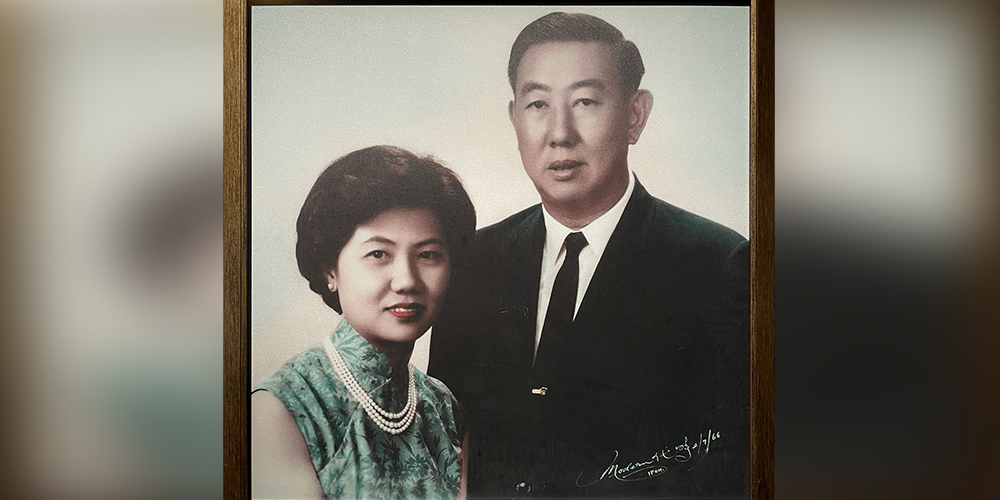
In 1950, the union between the Lee and Leong family took place. Lee Ming Hin’s son, Lee Loy Seng, and Leong Tian’s daughter, Leong Wan Chin got married. Lee Loy Seng made a bold move by moving the family business away from the tin industry into the rubber industry, something completely new to him. He knew that tin is not a renewable resource, but rubber trees could keep on giving.
The rubber industry complemented the tin industry. The heavy wooden mining buckets were replaced with lighter rubber buckets, the dredges were lined with rubber and many heavy machineries required rubber as well. His tenacity and foresight earned him the moniker “The Rubber Baron of Malaya”.
Leong Wan Chin started as a schoolteacher. Both of them were remembered as philanthropists and champions for Chinese education in Ipoh.
Ancestral Shrine Cabinet
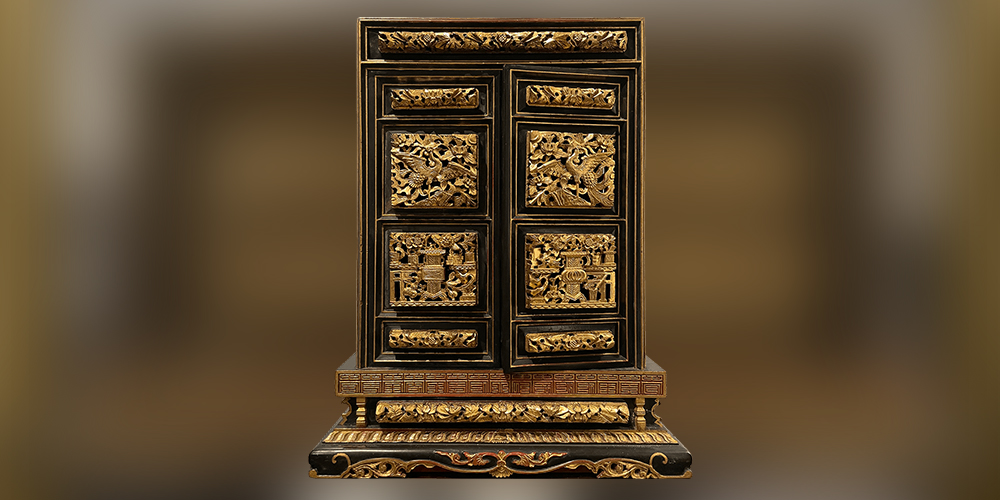
This cabinet was most probably made in southern China for the Peranakan Chinese market of Singapore, Penang, and Malacca. It is used to house ancestor tablets that honoured the souls of the departed. It would have been placed on a household’s altar as seen here. Why is it placed on the Lee family ancestral table? Are the Lee family linked to the Peranakan Chinese? We will find out in the next gallery.
Tin Mining Coolies
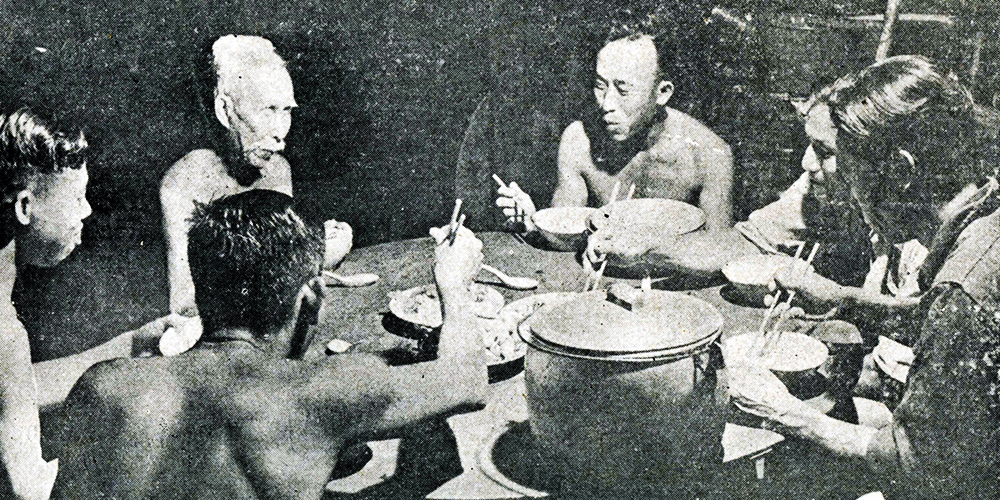
At this corner, we honour the tin mining coolies. It was through their hard work that Ipoh gained its wealth, and the tin miners had their lavish lives.
Tin mining coolies worked 7 hours a day under the hot sun carrying two mining buckets on their shoulders. Each load weigh 60 catties, which is around 36kg.
The photo shows tin mining coolies having their mid-day meal in Lee Ming Hin’s tin mine. Chinese mines supplied free food to their labourers. The quality of the food supplied to mining labourers varies from mine to mine. As a rule, the diet consists of rice, salt fish, vegetables, gourds, roots and beans, and occasionally meat. Three full meals are daily supplied with each mealtime lasted only half an hour for each shift. Unlimited quantities of tea, and in some cases, a monthly ration of tobacco and a monthly allowance for a haircut were given. Twice a month, on the 2nd and 16th days of every moon, were minor feasts when extra meat and fish dishes are supplied, and on national and traditional festivals, dinners with liquor are expected and are always given.
Women in Tin Mining
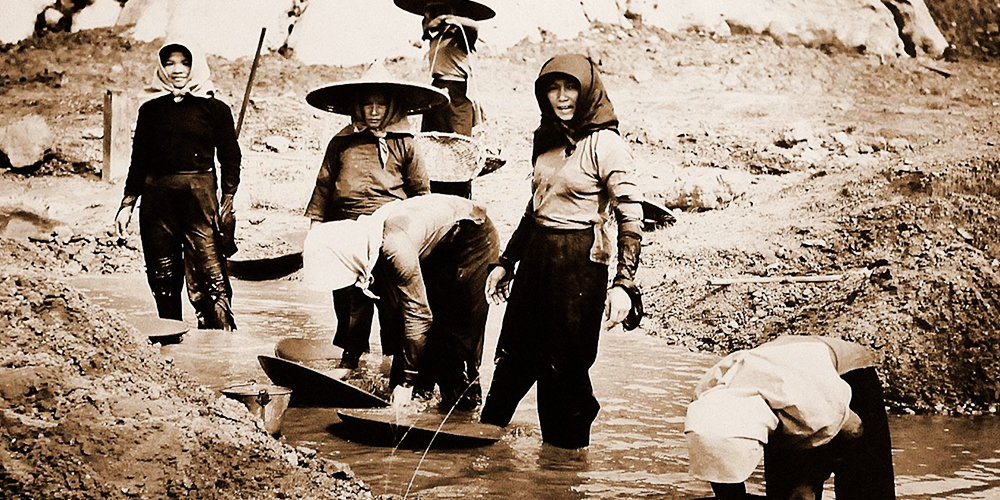
During the late 19th century, panning for tin in riverbeds using a dulang was a popular form of employment for women. Paid daily wages, these industrious Malay and Chinese women could recover up to 10 kilogrammes of tin ore daily from the riverbeds. This made dulang-washing a highly lucrative and popular enterprise.
By the late 1920s, some 7,500 annual dulang passes were issued at a fee of a dollar each, primarily to women and teenage children.