
Peranakan
Room
Who are the Peranakan Chinese?
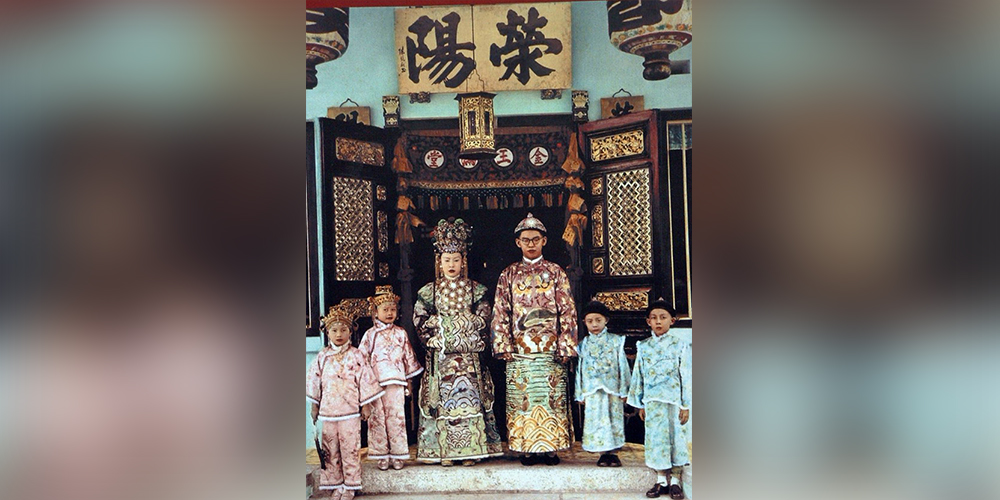
Welcome to the Peranakan Gallery! The term Peranakan Chinese generally refers to people of mixed Chinese and Malay heritage. Their origins can be traced to Chinese traders of Hokkien ancestry who married local women in 15th-century Malacca and adopted their customs.
They were also known as Straits Chinese as they were mainly concentrated in the British-ruled Strait Settlements of Malacca, Penang, and Singapore. They considered themselves British subjects, also known as the King’s Chinese. This status distinct the Chinese Peranakans from the Chinese who arrived later in Malaya in the 19th century, called sin kheh, or new immigrants.
Peranakan males are known as babas while the females are known as nyonyas. While some Peranakans have retained many of their cultural practices, many have assimilated into the larger Chinese community today.
The home language used among the Peranakans is also referred to as Peranakan, or Baba Malay. It is a creole dialect of the Malay Language which contains many of the words from the Chinese Hokkien dialect.
Its contemporary use is mainly limited to members of the older generation and has been listed as an endangered language. English has replaced Baba Malay as the main language spoken amongst the younger generation.
Peranakan cuisine or Nyonya cuisine is a unique blend of influences and cooking traditions of Chinese, Malay, and other Southeast Asian cultures. There are regional variations in Peranakan cuisine. Dishes from Penang in the northern part of Peninsular Malaysia possess Thai influences, such as more liberal use of tamarind and other sour ingredients. However, dishes from Singapore and Malacca show a greater Indonesian influence with the use of coconut milk.
Hew Pak Meh
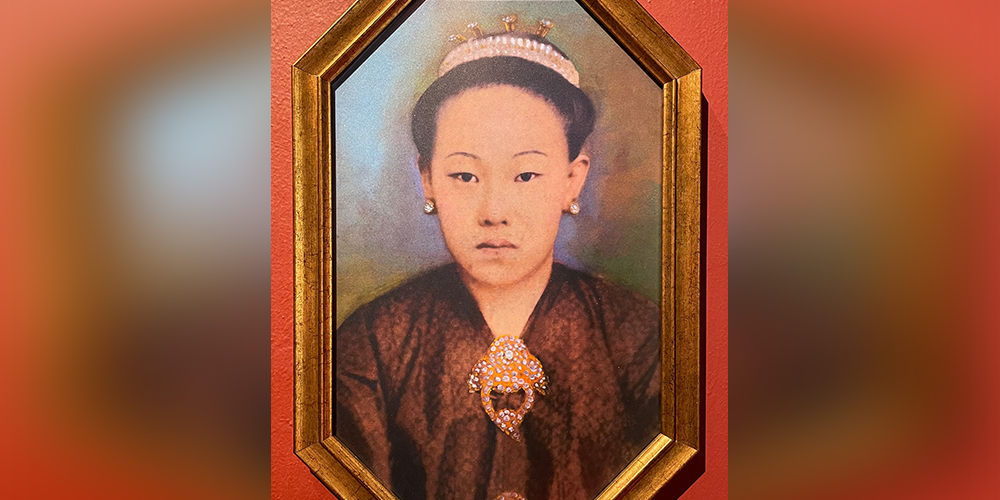
So how is the Lee family linked to the Chinese Peranakan?
The answer is Hew Pak Meh, Lee Ming Hin’s first wife and a nyonya. She came from the town of Papan, one of the earliest tin mining towns in Perak. It was a true love marriage, which was rare in a time where arranged marriages were common. Hew Pak Meh’s father gifted Lee Ming Hin with 10 acres of tin-mining land as part of the dowry. This land proved to be very valuable for the Lees.
Hew Pak Meh had a precious diamond. When the tin mines were declining, she pawned the diamond for cash. And when the mines improved, she bought it back. She did it many times to sustain the family mines.
However, her love story with Lee Ming Hin ended in a very sad note. It is a Peranakan custom for a woman to deliver her child in her family’s home. Heavily pregnant with her first child, Hew Pak Meh travelled from Menglembu back to Papan in a bullock cart. Sadly, both mother and child did not survive the journey. Lee Ming Hin grieved over the lost of his wife, and instructed his household to honour her every Qing Ming, a practice the Lee family maintains till this day.
Peranakan Weddings
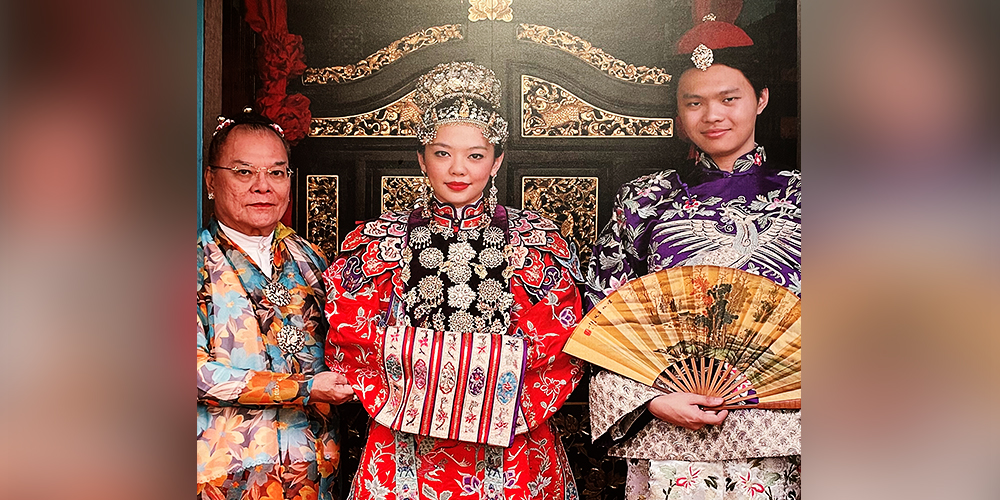
Traditional Peranakan wedding ceremonies are largely based on Chinese tradition. It is one of the most colourful wedding ceremonies in Malaysia and Singapore. The traditional Peranakan wedding is a 12-day affair filled with rituals and ceremonies. It is so elaborate that a Pak Chindek and Sang Kek Um (wedding master and mistress) are needed to guide the ceremony.
The picture depicts a bride and groom from the South (Malacca and Singapore) while the wedding accessories displayed belonged to a family from the North (Penang).
Lap Chai Ceremony
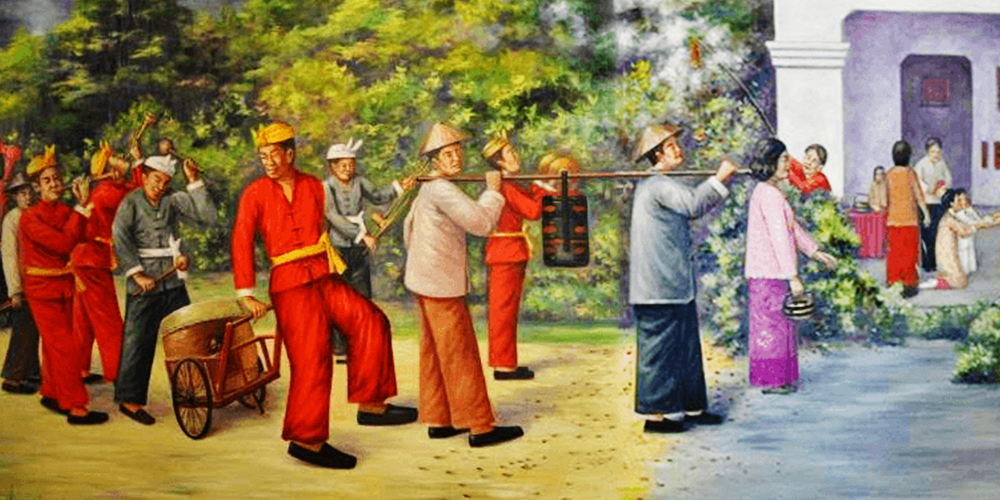
Lap Chai is where gifts are exchanged between the families of the bride and groom on an auspicious day before the wedding.
Before the Second World War, lap chai ceremonies were elaborate events. A procession of gift bearers, musicians playing the seronee or flute, and family members would make its way from the groom’s house to the bride’s.
Gifts bearing symbolic meanings are presented to the bride’s family, who will receive them, return some as out of politeness, and present gifts to the groom’s family.
Chiu Tau Ceremony

The chiu tau or hair-combing ceremony represents the couple’s entry into adulthood. It is the most sacred of all the rituals. In fact, it is so important that if the bride or the groom did not undergo it, they would not be considered married. Any offspring would therefore be illegitimate.
The chiu tau ceremony is held in the homes of the bride and groom respectively from late at night till the early hours of the next day, depending on what time the diviner or sinseh pokwa deems auspicious.
A three-tier, sam-kai altar used to honour the highest god Ti Kong is set up in the outer reception hall, facing the street. Besides the usual offerings of cooked foods, tea, wine, flowers, a pair of glass lamps, and the chanab is placed on it.
Chim Pang – Unveiling the Bride
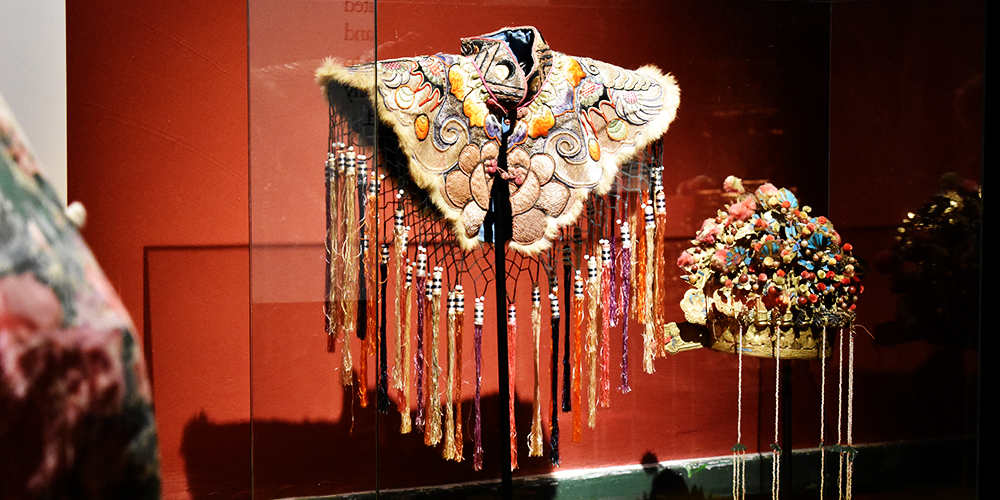
The Chim Pang ceremony marks the first meeting of the bridegroom and the bride. The bridegroom would reveal the bridal veil in the wedding chamber. Traditionally, this is the first time they lay eyes upon one another. They would be served tea and a bowl of Kueh Ee consisting of red and white glutinous rice ball in sugar syrup. This signifies that the newlyweds are blessed with the sweetness of life. Only one piece each is eaten, and the rest of the bowl is left under the bed. The number of maggots spawned over the next 12 days is supposed to indicate the number of children.
Makan Choon Tok – First Meal 春桌
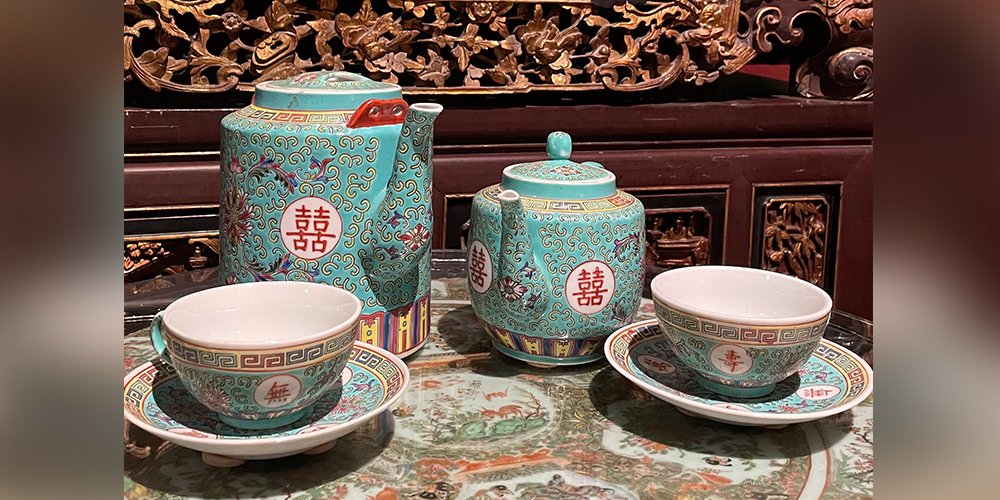
After the Chim Pang ceremony, the Makan Choon Tok ceremony is held for the bridegroom and the bride. This is the first occasion when the couple would partake a meal as husband and wife. This ceremony consists of traditional feast of 12 dishes for the couple.
The choon tok would be set near a window with a wall mirror facing the bridal bed. The mirror is deliberately positioned to reflect the food laid out on the table. The reflection signifies prosperity and abundance.
During the meal, the couple would play a game. Underneath the table, if the groom manages to put his foot over the bride’s, he would be the master of the house. However, if she manages to put her foot over his, then she would rule the roost. Two tall candles on the table represent the bride and the groom. People believed that if the groom’s candle burned out first, he would pass away first, and vice versa.
An Chng – The Blessing of the Wedding Bed (Pre-nuptial activities)
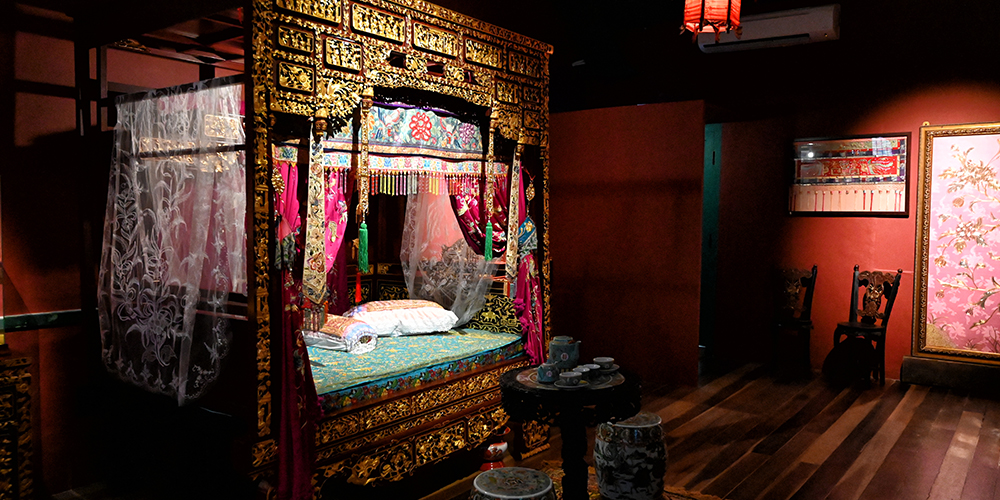
The bridal chamber is furnished with new curtains, embroidered tapestries, and carpets and flowers. A comb of banana, lemongrass, and yam together with three lit joss-sticks are put in an earthen pot and kept under the wedding bed. These items symbolise wealth, longevity, and fertility. The room is then guarded carefully to prevent defilement, while a date and time is set for the an ch’ng ceremony.
During the ceremony, a young boy would roll over the wedding bed three times as a blessing to make sure that a male would be the first-born. This practice is common amongst the Chinese in Malaysia and Singapore till this day.
Sireh in Chinese Peranakans’ Wedding
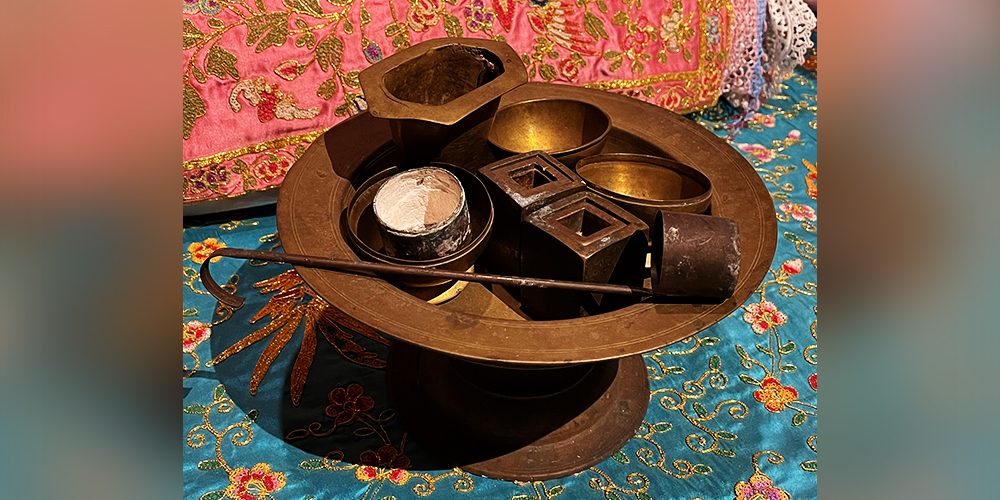
The sireh played a pivotal role in the traditional wedding ceremony. When the wedding invitation was dispatched, sireh would be personally delivered to each household to accompany the invitation card. Not doing so would signify a lack of sincerity.
During the wedding, the sireh set would be included as part of the bridal trousseau, accompanying the bride during the bridal procession. It had an important role in proclaiming the virginity of the bride. The sireh set would remain in the bridal chamber for the duration of the 12-day ceremony. If the bridegroom had any reason to suspect that the bride was not a virgin, he could annul the marriage by overturning the sireh set.
Similarly, on the twelfth day of the wedding, if the mother-in-law was not convinced about the bride’s virginity upon inspecting the kain chiu tau (virginity cloth), she could also overturn the sireh set to annul the marriage. However, such an incident was never heard of. It was likely that the bridegrooms in those days were too timid to protest and the mother-in-law did not want to “lose face” by proclaiming that her hand-picked daughter-in-law was not a virgin.
Chicken Basket under the Bed
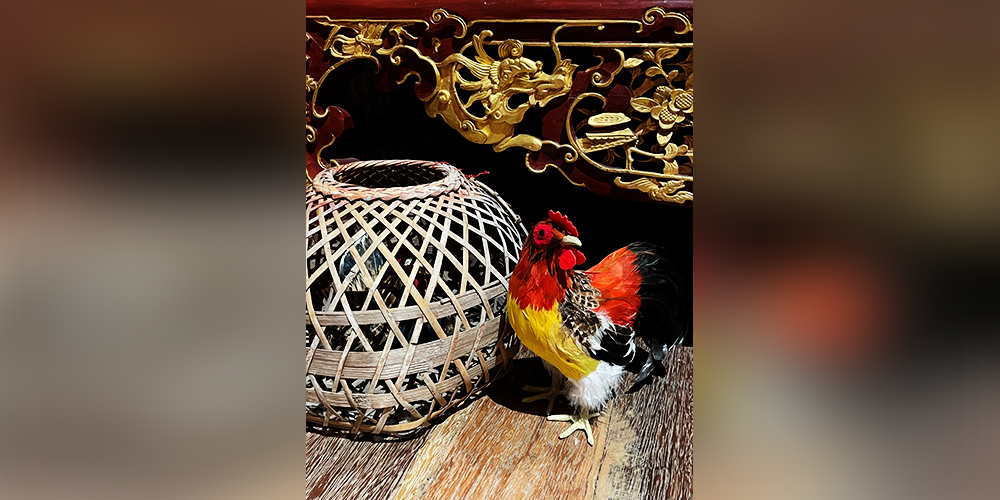
On the wedding night, a rooster and a hen would be placed in a basket under the wedding bed. The assumption was that the couple will consummate the marriage that very night. The following morning, the mothers of the newlyweds would come into the room to let the chickens out of the basket.
The first one that emerges from the basket determines the gender of the couple’s first born. If the rooster emerged first, the family could expect a male first-born, and a baby girl if the hen took the lead. So, what if the rooster and hen emerged at the same time? You figure it out.